





Smartphones have evolved far beyond simple devices for making calls and sending text messages. Modern smartphones combine powerful processors, high-quality cameras, advanced security systems, artificial intelligence, fast internet connectivity, and many other technologies in a compact device.
However, many users purchase smartphones based mainly on screen size, camera megapixels, storage, or price without understanding the features that actually affect everyday performance and convenience. Knowing the most important smartphone features can help you choose the right device and get more value from the phone you already own.
In this guide, we will explore 10 essential smartphone features you should know about, how they work, why they matter, and what you should consider before buying a new smartphone.
1. Display Quality and Refresh Rate
The display is one of the most important parts of a smartphone because you interact with it every day. Whether you are watching videos, browsing websites, playing games, reading articles, or using social media, display quality directly affects your experience.
Screen Resolution
Screen resolution refers to the number of pixels displayed on the screen. Common resolutions include HD+, Full HD+, and Quad HD+. A higher resolution generally produces sharper images and text.
For most users, a Full HD+ display is more than sufficient for everyday activities. Higher resolutions can provide additional sharpness, particularly on larger screens, but they may also consume more battery.
AMOLED and OLED Displays
Many modern smartphones use OLED or AMOLED technology. These displays can produce deep blacks, strong contrast, vibrant colors, and excellent viewing quality.
LCD displays can still provide good quality, especially on affordable smartphones, but OLED-based screens are often preferred for premium devices.
Refresh Rate
Refresh rate refers to how many times the screen refreshes per second. A 60Hz screen refreshes 60 times per second, while 90Hz, 120Hz, or higher displays can make scrolling and animations appear smoother.
A higher refresh rate is particularly useful for:
- Scrolling through websites
- Social media browsing
- Gaming
- Watching supported content
- Navigating menus
However, higher refresh rates can consume additional battery power. Many smartphones therefore use adaptive refresh rates that automatically adjust according to what you are doing.
2. Camera System and Computational Photography
Smartphone cameras have become one of the biggest selling points of modern phones. But camera quality is about much more than megapixels.
A smartphone may have a 108MP or 200MP camera, but that does not automatically mean it takes better pictures than a phone with a lower megapixel count.
Main Camera
The primary camera is usually designed for everyday photography. Sensor size, lens quality, image processing, stabilization, and software all influence the final image.
Ultra-Wide Camera
An ultra-wide camera captures a wider field of view. It is useful for:
- Landscapes
- Buildings
- Group photographs
- Travel photography
- Large indoor spaces
Telephoto Camera
Telephoto cameras are designed for optical zoom. They allow you to photograph distant objects while maintaining better image quality than simply cropping a standard photograph.
Optical Image Stabilization
Optical Image Stabilization, commonly called OIS, helps reduce the effect of hand movement while taking photographs and recording videos.
It can be particularly useful in low-light photography and video recording.
Computational Photography
Modern smartphones also use software and artificial intelligence to improve images. Features such as HDR, night photography, portrait mode, scene recognition, and automatic image processing can significantly improve results.
Therefore, when comparing smartphone cameras, look beyond megapixel numbers and consider the complete camera system.
3. Battery Capacity and Fast Charging
Battery life is another essential smartphone feature because even the most powerful phone becomes inconvenient if its battery runs out quickly.
Battery capacity is usually measured in milliampere-hours, or mAh. A larger capacity can provide more energy, but battery life also depends on other factors.
For example, a phone with a large display, powerful processor, high refresh rate, and demanding software may consume more power than a less powerful device.
Fast Charging
Fast charging allows smartphones to recharge their batteries much more quickly than traditional charging.
Depending on the device, fast-charging technologies can provide a significant amount of battery capacity within a short period.
This is useful for people who frequently travel or have busy schedules.
Wireless Charging
Some smartphones also support wireless charging. Instead of connecting a cable directly to the phone, you place the device on a compatible charging pad.
Wireless charging is convenient, although wired charging can often provide faster charging speeds.
Battery Health
Battery capacity gradually decreases as a battery goes through charging cycles. Good charging habits, appropriate temperatures, and built-in battery protection features can help maintain battery health over time.
4. Processor and Performance
The processor is essentially one of the main components responsible for smartphone performance. It handles applications, system functions, games, artificial intelligence tasks, photography processing, and many other operations.
Modern smartphone processors typically contain multiple CPU cores and integrated graphics capabilities.
Why Processor Performance Matters
A capable processor can help your smartphone:
- Open applications quickly
- Run multiple applications
- Handle demanding games
- Process photographs faster
- Record high-resolution video
- Support advanced AI features
- Improve overall responsiveness
However, processor performance should not be considered independently.
A phone with a powerful processor but poor software optimization may not feel as smooth as a phone with a slightly less powerful processor and better optimization.
Processor Generations
Processor technology changes rapidly. Newer generations often provide improvements in performance, efficiency, graphics, connectivity, and artificial intelligence capabilities.
When purchasing a smartphone, look at the processor generation rather than simply assuming that a higher model number always means a better experience.
5. RAM and Storage
RAM and internal storage are two different smartphone features that are often confused.
What Is RAM?
RAM, or Random Access Memory, temporarily stores information needed by active applications and the operating system.
More RAM can allow a smartphone to keep more applications available in the background without constantly reloading them.
For everyday users, moderate RAM can be sufficient. Heavy multitasking, gaming, content creation, and professional applications may benefit from larger amounts of RAM.
What Is Internal Storage?
Storage is where your photographs, videos, applications, documents, games, and other files are permanently stored.
Common smartphone storage capacities include:
- 64GB
- 128GB
- 256GB
- 512GB
- 1TB
If you take many photographs, record videos, download movies, or install large games, choosing more storage can be beneficial.
Expandable Storage
Some smartphones support microSD cards, allowing users to expand storage.
However, many premium smartphones no longer provide memory card slots. Therefore, you should carefully consider your storage needs before purchasing a phone.
6. 5G and Modern Connectivity
Connectivity determines how your smartphone communicates with mobile networks, Wi-Fi networks, accessories, and other devices.
5G Connectivity
5G is the newer generation of mobile network technology. Depending on network availability and conditions, it can provide faster speeds and lower latency than older network technologies.
5G can be useful for:
- High-quality video streaming
- Large downloads
- Cloud gaming
- Video calls
- Mobile hotspots
- Online applications
However, 5G availability varies by country, city, and mobile network operator. Therefore, buying a 5G smartphone is most useful when compatible 5G networks are available where you live.
Wi-Fi
Modern smartphones also support newer Wi-Fi standards that can provide improved speed, efficiency, and reliability when paired with compatible routers.
Bluetooth
Bluetooth allows smartphones to connect wirelessly to headphones, speakers, smartwatches, cars, keyboards, and other accessories.
Understanding these connectivity options can help you make better use of your smartphone ecosystem.
7. Biometric Security
Smartphone security is extremely important because phones contain personal photographs, messages, financial information, emails, documents, and accounts.
Modern smartphones commonly provide biometric security features.
Fingerprint Sensors
Fingerprint sensors allow users to unlock their phones using a registered fingerprint.
They can also be used for authentication inside certain applications and services.
Fingerprint scanners may be positioned under the display, on the side of the phone, or on the rear depending on the device.
Facial Recognition
Some smartphones use facial recognition to identify the user’s face and unlock the device.
The security level of facial recognition varies depending on the technology used. Systems that use advanced depth or infrared sensing can offer stronger security than basic camera-based facial recognition.
Why Biometrics Matter
Biometric authentication provides a convenient alternative to entering a password or PIN every time you unlock your phone.
However, you should still use a strong PIN or password as a backup security method.
8. Operating System and Software Updates
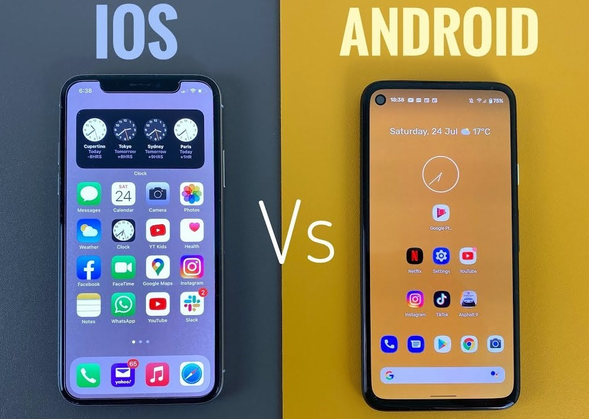
The operating system controls how your smartphone works. The two dominant smartphone platforms are Android and iOS.
The operating system affects:
- User interface
- Application compatibility
- Security
- Privacy controls
- Notifications
- Multitasking
- Customization
- Device integration
Android
Android is used by many smartphone manufacturers and offers a wide variety of devices at different prices.
Android phones often provide extensive customization options, including home-screen layouts, widgets, launchers, and other interface settings.
iOS
iOS is Apple’s mobile operating system. It is designed specifically for Apple’s hardware and provides close integration with other Apple products and services.
Software Updates
Software updates are extremely important. Manufacturers regularly release updates that can introduce new features, improve performance, fix bugs, and address security vulnerabilities.
When buying a smartphone, pay attention to the manufacturer’s software-support policy.
A phone that receives updates for many years can remain useful and secure for a much longer period.
9. AI Features and Smart Capabilities
Artificial intelligence has become an increasingly important part of smartphones.
AI features can now be found in cameras, keyboards, voice assistants, photo editors, productivity applications, and system tools.
AI Photography
AI can automatically identify scenes, improve exposure, adjust colors, reduce noise, and optimize photographs.
For example, the camera may recognize a landscape, food, person, or night scene and automatically adjust settings.
AI Writing Tools
Some smartphones provide AI-powered writing features that can help summarize information, rewrite text, correct grammar, or generate suggestions.
AI Photo Editing
Modern smartphones can also use AI to remove unwanted objects, improve images, change backgrounds, or enhance photographs.
On-Device AI
Some newer smartphones perform AI tasks directly on the device instead of sending all processing to a remote server.
On-device processing can potentially provide faster responses and improve privacy for certain tasks.
As AI capabilities continue developing, they are becoming an increasingly important factor when choosing a smartphone.
10. Water Resistance and Durability
A smartphone is an expensive electronic device, so durability is an important feature that should not be overlooked.
Water and Dust Resistance
Many modern smartphones have an IP rating that indicates their level of protection against dust and water under specified testing conditions.
For example, some premium smartphones are designed to withstand exposure to water better than ordinary devices.
However, water resistance does not mean that a smartphone is completely waterproof in every situation.
Protection can also decrease over time because of physical damage, aging seals, repairs, or normal wear.
Screen Protection
Modern smartphones often use strengthened glass to improve resistance against scratches and accidental drops.
Nevertheless, no smartphone screen is completely unbreakable.
Using a good-quality protective case and screen protector can reduce the risk of damage.
Build Materials
Smartphones may use materials such as plastic, aluminum, stainless steel, or titanium.
Premium materials can provide a more sophisticated appearance, while plastic can sometimes provide advantages in weight, durability, and cost.
How These Features Work Together
It is important to understand that smartphone features do not work independently.
For example, a powerful processor combined with sufficient RAM can provide smooth performance. A good camera sensor combined with OIS and advanced image processing can produce better photographs. A large battery combined with an efficient processor can provide longer battery life.
This means you should evaluate the entire smartphone rather than focusing on one specification.
A phone with the highest camera megapixel count may not be the best camera phone. Similarly, a phone with the largest battery may not provide the longest battery life.
Which Features Matter Most for Different Users?
Different users have different priorities.
For Students
Students may benefit from:
- Good battery life
- Reliable performance
- Sufficient storage
- Good display
- Fast connectivity
- Long software support
For Mobile Gamers
Gamers should pay particular attention to:
- Powerful processor
- Strong graphics performance
- High refresh-rate display
- Adequate RAM
- Efficient cooling
- Large battery
- Fast charging
For Photographers
Photography-focused users should consider:
- Camera sensor quality
- OIS
- Telephoto capabilities
- Ultra-wide camera
- Night photography
- Video stabilization
- Image-processing software
For Business Users
Business users may prioritize:
- Security
- Battery life
- Performance
- Storage
- Reliable connectivity
- Software updates
- Productivity features
For Everyday Users
Most everyday users should focus on finding a balanced smartphone with:
- Good display
- Reliable camera
- Long battery life
- Smooth performance
- Enough storage
- Strong security
- Long-term software support
Common Smartphone Features You Should Not Ignore
Besides the 10 major features discussed above, several smaller features can also make a significant difference.
NFC
Near Field Communication, or NFC, enables short-range wireless communication. It can be used for contactless payments, device pairing, and other applications.
Stereo Speakers
Stereo speakers can provide a better audio experience when watching videos, playing games, or listening to music.
USB Connectivity
The USB port is used for charging, data transfer, accessories, and sometimes external displays.
Dual SIM
Dual-SIM support allows users to operate two mobile connections on one smartphone. This can be useful for separating personal and business numbers or using different mobile networks.
Always-On Display
Certain OLED smartphones offer always-on displays that can show the time, notifications, battery information, and other information without fully activating the screen.
How to Choose the Right Smartphone
Before purchasing a smartphone, make a list of the features that matter most to you.
Start with your budget and determine what you realistically need. Then compare processors, displays, cameras, battery capacity, charging technology, RAM, storage, connectivity, security, and software support.
Do not purchase a smartphone simply because it has impressive numbers.
For example, 200MP sounds better than 50MP, but megapixels alone do not determine camera quality. Similarly, 16GB of RAM may sound impressive, but many everyday users may not need that much.
The best smartphone is the one that provides the right combination of features for your actual usage.
Final Thoughts
Modern smartphones are sophisticated computers that combine dozens of technologies into a single portable device. Understanding their major features makes it easier to choose a phone and use it effectively.
The 10 essential smartphone features discussed in this guide are display quality, camera technology, battery and charging, processor performance, RAM and storage, connectivity, biometric security, software support, AI capabilities, and durability.
When comparing smartphones, avoid focusing on a single specification. Instead, consider how all the components work together.
A balanced smartphone with a good display, capable processor, reliable camera, strong battery life, sufficient storage, modern connectivity, strong security, and long-term software support can provide an excellent experience for years.