


Choosing a new smartphone can be confusing, especially when the biggest decision is whether to buy an Android phone or an iPhone. Both platforms offer powerful processors, excellent cameras, modern designs, high-quality displays, strong security features, and access to thousands of apps. However, Android and iPhone are built around very different approaches to smartphone software and hardware.
Android is an operating system developed by Google and used by many smartphone manufacturers, including Samsung, Google, OnePlus, Xiaomi, Motorola, and others. The iPhone, on the other hand, is made exclusively by Apple and runs Apple’s iOS operating system.
The question is not simply which platform is better. The better choice depends on your budget, preferences, desired features, ecosystem, camera requirements, gaming needs, customization preferences, and how long you want to keep your phone.
In this guide, we will compare Android and iPhone in detail and explain their major differences, advantages, disadvantages, performance, cameras, battery life, security, software updates, pricing, customization, gaming, and overall user experience.
What Is Android?
Android is a mobile operating system developed primarily by Google. Unlike iOS, Android is available on smartphones from many different manufacturers.
This gives consumers a huge range of choices. You can find inexpensive Android phones designed for basic everyday use, mid-range devices with impressive specifications, and premium flagship smartphones with advanced cameras, processors, displays, and artificial intelligence features.
Popular Android smartphone brands include Samsung, Google Pixel, OnePlus, Xiaomi, Motorola, Oppo, Vivo, and several others.
One of Android’s biggest advantages is flexibility. Manufacturers can customize Android with their own interfaces, features, applications, and hardware designs.
Android also provides users with extensive control over the appearance and behavior of their smartphones.
What Is an iPhone?
The iPhone is Apple’s smartphone product line and runs iOS, Apple’s mobile operating system.
Unlike Android, iOS is designed specifically for Apple’s own hardware. Apple controls the processor, smartphone hardware, operating system, applications, security architecture, and many other parts of the experience.
This allows Apple to tightly integrate hardware and software.
iPhones are generally positioned as premium smartphones, although Apple has offered different models and price levels within its product lineup. iPhones are particularly popular among users who value a simple interface, long-term software support, strong ecosystem integration, privacy features, and consistent performance.
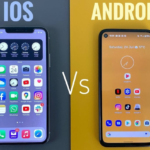
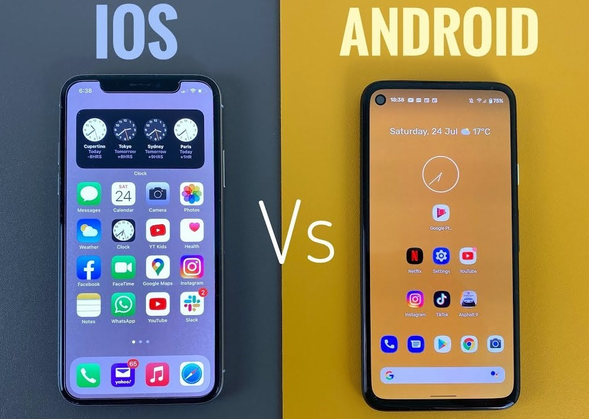
Android vs iPhone: The Biggest Difference
The biggest difference between Android and iPhone is the philosophy behind each platform.
Android focuses heavily on choice and flexibility, while iPhone focuses more on integration and simplicity.
With Android, you can choose from many manufacturers, designs, screen sizes, camera systems, processors, storage options, and price ranges.
With iPhone, Apple controls the complete experience. The number of models is smaller, but hardware and software are designed to work closely together.
This fundamental difference affects almost everything else, including customization, pricing, software updates, accessories, apps, and ecosystem features.
Design and Build Quality
Both Android smartphones and iPhones can offer excellent build quality.
Premium Android phones often use glass, aluminum, titanium, or other high-quality materials. Manufacturers compete heavily on design, which means Android users can choose from curved displays, flat displays, foldable phones, compact phones, large phones, and unusual camera arrangements.
iPhone models generally follow a more consistent design language. Apple tends to make gradual design changes rather than completely changing the appearance every year.
The choice here is largely personal.
If you want many different designs, Android offers more options. If you prefer Apple’s recognizable and consistent design approach, the iPhone may be more attractive.
Display Quality
Modern smartphones from both platforms can have excellent displays.
Many premium Android phones use high-resolution OLED or AMOLED screens with high refresh rates. These displays can provide smooth scrolling, deep blacks, strong contrast, and vibrant colors.
iPhones also use high-quality OLED displays on many recent models and provide excellent brightness, color accuracy, and viewing quality.
For ordinary users, the difference in display quality between a premium Android phone and a premium iPhone may be less important than the differences between individual models.
When buying a phone, you should consider the actual display specifications rather than simply choosing Android or iPhone.
Performance and Speed
Performance is another area where both platforms are extremely capable.
Apple designs its own smartphone processors, allowing the company to closely optimize iOS for its hardware. This hardware-software integration helps iPhones deliver consistently strong performance.
Android performance varies considerably because Android phones use processors from different manufacturers and come in many price categories.
A premium Android flagship can be extremely fast and can compete directly with an iPhone in demanding applications, gaming, and multitasking.
However, an inexpensive Android phone should not be compared with a premium iPhone because they belong to completely different performance categories.
For the best comparison, compare phones at similar prices and performance levels.
Software Experience
Android and iOS provide very different software experiences.
Android generally gives users more freedom. You can customize home screens, widgets, default applications, launchers, notification behavior, and many other aspects of the interface.
iOS is more controlled. Apple provides a consistent interface designed to be simple and easy to understand.
Some users prefer Android because they enjoy customizing their smartphones. Others prefer iOS because they want an interface that feels consistent and straightforward.
Neither approach is universally better.
Customization
Android is the clear winner when it comes to customization.
Android users can often change launchers, widgets, icon styles, default applications, home-screen layouts, notification settings, and many other interface elements.
Some Android phones also offer additional customization tools developed by their manufacturers.
iOS has become more customizable over the years, particularly through widgets, wallpapers, lock-screen customization, and other personalization features. However, Apple still maintains more restrictions than Android.
If customization is extremely important to you, Android is usually the better choice.
Apps and App Stores
Both Android and iPhone provide access to millions of apps and games through their respective app stores.
Android primarily uses the Google Play Store, while iPhone users download applications through Apple’s App Store.
Most major applications are available on both platforms.
However, there can be differences in app availability, release timing, features, pricing, and optimization.
Some developers release applications or features on iOS first because of Apple’s user base and app ecosystem. Android, meanwhile, provides greater flexibility for software installation and distribution.
Camera Quality
Smartphone photography has become one of the biggest reasons people upgrade their phones.
Both premium Android phones and iPhones can take excellent photos and videos.
Android manufacturers often compete by adding large camera sensors, high-megapixel cameras, powerful zoom systems, advanced computational photography, and AI-based image processing.
Some Android flagships are particularly strong for long-distance zoom and photography flexibility.
iPhones are widely known for consistent image processing, video quality, natural colors, and reliable performance across different camera modes.
The best camera depends heavily on the individual phone model.
A premium Android phone can outperform an iPhone in one camera category while the iPhone may perform better in another.
Video Recording
Video recording is an area where iPhones have traditionally been highly competitive.
Apple focuses heavily on video quality, stabilization, color consistency, audio recording, and integration between camera hardware and software.
Many premium Android phones also offer excellent video recording, including high-resolution video, advanced stabilization, cinematic modes, and professional controls.
For casual users, both platforms provide more than enough video quality.
For people who create videos regularly, it is worth comparing the specific camera systems rather than choosing based only on the operating system.
Battery Life
Battery life depends on the individual smartphone rather than simply whether it runs Android or iOS.
Android manufacturers offer phones with different battery capacities, ranging from relatively compact batteries to very large batteries.
Some Android devices also support extremely fast wired and wireless charging.
iPhones often have excellent battery optimization because Apple controls both the hardware and operating system.
However, battery capacity alone does not determine battery life. Processor efficiency, display technology, software optimization, background applications, network usage, and user behavior all affect how long a smartphone lasts.
If battery life is important, compare real-world battery tests and specifications for the exact models you are considering.
Charging Speed
Charging technology is another area where Android phones often provide more choices.
Many Android manufacturers offer fast charging systems that can recharge a significant portion of a battery relatively quickly.
iPhones also support fast charging, but Apple’s charging approach is generally more conservative than some Android manufacturers.
If you frequently forget to charge your phone and need a quick battery boost, an Android phone with very fast charging may be attractive.
Security
Both Android and iPhone provide strong security features.
iPhones benefit from Apple’s tightly controlled hardware and software ecosystem. Apple places significant emphasis on application security, device encryption, privacy controls, and system-level protections.
Android also includes strong security technologies, and modern Android devices can provide biometric authentication, encryption, secure application environments, and regular security updates.
However, Android is a much larger and more diverse ecosystem. Security update policies can vary between manufacturers and models.
For users who want a tightly controlled environment, iPhone can be appealing. For Android users, choosing a reputable manufacturer and a phone with a strong update policy is important.
Software Updates
Software support is one of the most important differences between smartphone manufacturers.
Apple controls iOS updates and can distribute them directly to supported iPhones. This creates a relatively consistent update experience.
Android updates are more complicated because Google develops Android while smartphone manufacturers customize it for their own devices.
Some Android manufacturers now provide long-term software and security support for selected models, but support varies depending on the brand and device.
If you plan to keep your smartphone for many years, investigate the specific manufacturer’s update commitment before purchasing.
Customization and Freedom
Android generally provides greater freedom.
For example, Android users have historically had more options for choosing default applications, managing files, customizing interfaces, and installing software from sources outside the primary app store.
iOS provides a more controlled environment.
This can make iPhone simpler for ordinary users, but some advanced users may find the restrictions frustrating.
Therefore, Android is generally better for people who like experimenting with their devices, while iPhone can be better for people who prefer a controlled and predictable experience.
File Management
Android typically provides more traditional file-management flexibility.
Users can access files, organize folders, connect external storage devices, and transfer data in various ways depending on the device and software.
iPhone also provides file-management tools, but Apple’s system is more tightly controlled.
For most users who primarily use cloud storage and common applications, the difference may not matter.
For professionals who frequently move files between devices, Android may offer more flexibility.
Gaming
Both platforms are excellent for mobile gaming.
Premium iPhones offer powerful processors and strong graphics performance, while high-end Android phones can provide large displays, high refresh rates, advanced cooling systems, and gaming-focused features.
Android has an advantage in hardware variety. Some gaming-oriented Android smartphones are specifically designed for demanding games.
iPhone has an advantage in consistency because Apple controls its hardware and software environment.
If gaming is your priority, compare the specific processor, GPU, display refresh rate, cooling system, and battery performance of the phones you are considering.
Ecosystem and Other Devices
The ecosystem is one of the strongest reasons people choose iPhone.
Apple offers products such as Mac computers, iPads, Apple Watches, and AirPods that can work closely together.
For example, users can move between Apple devices more easily, share files, synchronize information, and continue certain tasks across devices.
Android also has a strong ecosystem, especially through Google services and manufacturers such as Samsung.
Samsung’s ecosystem includes smartphones, tablets, watches, earbuds, laptops, and other devices.
Android also works particularly well with Windows PCs and a wide range of accessories.
If you already own several devices from one ecosystem, staying within that ecosystem can make your life easier.
Price and Value
Android is usually the better choice for budget flexibility.
You can find Android phones at almost every price level. There are entry-level devices for basic tasks, affordable mid-range phones, and premium flagship models.
Apple generally focuses on the premium segment, although older iPhone models can provide more affordable options.
If you have a limited budget, Android gives you more choices.
If you are willing to spend more for long-term software support, premium hardware, ecosystem integration, and Apple’s overall user experience, an iPhone may provide strong value for your particular needs.
Resale Value
iPhones often maintain strong resale value compared with many smartphones.
This is partly because Apple maintains a relatively consistent product lineup and provides long-term software support.
Android resale value varies significantly by brand and model.
Some premium Android phones retain their value well, while inexpensive models can lose value more quickly.
If you regularly upgrade your phone and sell your old device, resale value should be included in your overall cost calculation.
Which Is Better for Students?
For students, either platform can be a good choice.
Android may be better for students who want an affordable phone, expandable features, customization, and a wide range of hardware choices.
iPhone may be attractive to students who already use other Apple devices or want a simple experience with strong long-term software support.
The best option depends heavily on budget.
There is no reason to spend a large amount of money on a premium smartphone if your primary activities are messaging, browsing, studying, social media, and taking occasional photos.
Which Is Better for Business Users?
Both platforms are suitable for business.
iPhones can be attractive because of their security, consistent software environment, and integration with other Apple devices.
Android can be attractive because of its customization, hardware variety, file management, and compatibility with a broad range of business environments.
For organizations, the choice may depend on existing IT infrastructure, security policies, management tools, employee preferences, and application requirements.
Which Is Better for Photography?
There is no universal winner.
If you prioritize camera flexibility, zoom, and advanced photography hardware, some premium Android phones may be better.
If you prioritize consistent photography and excellent video recording, an iPhone may be the better choice.
The most important thing is to compare the actual camera systems of the models you are considering.
Which Is Better for Privacy?
Both Android and iPhone offer privacy and security features, but their approaches differ.
Apple places a strong emphasis on privacy as part of its product philosophy.
Android also provides extensive privacy controls, permissions management, security features, and options for controlling application access.
Privacy is influenced not only by the operating system but also by the applications you install, the accounts you use, browser settings, and your own security habits.
Advantages of Android
Android has several important advantages:
- Huge selection of smartphones
- Options for almost every budget
- Extensive customization
- Greater hardware variety
- Fast charging on many models
- Many display and camera choices
- Flexible file management
- Wide range of accessories
- Excellent gaming phones
- Foldable smartphone options
- Greater freedom for advanced users
Disadvantages of Android
Android also has some disadvantages:
- Software experience varies between manufacturers
- Update policies differ between devices
- Budget phones may have weaker performance
- Some devices include unnecessary preinstalled applications
- The large number of choices can make buying confusing
- Long-term support depends heavily on the manufacturer
Advantages of iPhone
iPhone offers several major benefits:
- Strong hardware and software integration
- Consistent user interface
- Excellent performance
- Strong video recording
- Long-term software support
- Strong ecosystem integration
- High resale value
- Good security and privacy controls
- Consistent application experience
- Easy integration with other Apple devices
Disadvantages of iPhone
There are also some disadvantages:
- Generally higher purchase prices
- Less customization than Android
- More controlled software environment
- Fewer hardware choices
- Less flexibility for certain file-management tasks
- Some accessories and services can be expensive
- Users have fewer choices when selecting hardware configurations
Android vs iPhone: Quick Comparison
| Feature | Android | iPhone |
|---|---|---|
| Hardware choice | Excellent | Limited |
| Budget options | Excellent | Limited |
| Customization | Excellent | Good |
| Performance | Excellent on premium models | Excellent |
| Camera | Excellent | Excellent |
| Video | Excellent | Excellent |
| Gaming | Excellent | Excellent |
| Fast charging | Often better | Good |
| Security | Excellent | Excellent |
| Software updates | Depends on manufacturer | Generally consistent |
| File management | More flexible | More controlled |
| Ecosystem | Excellent | Excellent |
| Resale value | Varies | Generally strong |
| Ease of use | Excellent | Excellent |
| Foldable options | Available | Not a major iPhone category |
| Best for flexibility | Android | — |
| Best for simplicity | — | iPhone |
So, Which Is Better: Android or iPhone?
The answer depends on what you want from your smartphone.
Choose Android if you want:
- More phone choices
- A lower starting price
- Extensive customization
- Faster charging options
- Flexible file management
- Different screen sizes and designs
- Advanced hardware choices
- Foldable or gaming-focused phones
Choose iPhone if you want:
- A simple and consistent interface
- Strong hardware-software integration
- Long-term software support
- Excellent video recording
- Strong ecosystem integration
- High resale value
- A controlled and polished user experience
Final Verdict
Android and iPhone are both excellent smartphone platforms, but they are designed for different types of users.
Android is better for flexibility, customization, hardware variety, and budget choice. It gives consumers the freedom to select from hundreds of devices with different features and prices.
iPhone is better for simplicity, ecosystem integration, consistent performance, software support, and a tightly integrated hardware-software experience.
There is no single smartphone that is perfect for everyone. Someone who loves customization and wants maximum hardware choice may prefer Android, while someone who wants a simple experience and already owns Apple products may prefer an iPhone.
Before buying, consider your budget, camera requirements, gaming needs, battery expectations, software preferences, existing devices, and how long you plan to keep the phone.