





Cloud computing has changed the way businesses, organizations, developers, and individuals store data, run applications, and manage IT infrastructure. Instead of purchasing and maintaining expensive physical servers, organizations can use cloud environments to access computing resources whenever they need them.
However, cloud computing is not a single type of infrastructure. The three most common cloud deployment models are public cloud, private cloud, and hybrid cloud. Each model has different characteristics, advantages, limitations, security considerations, costs, and use cases.
Choosing the right cloud model can have a major impact on performance, scalability, compliance, operational costs, and long-term business growth. A startup may benefit from the flexibility of a public cloud, while a large organization with strict security requirements may prefer a private cloud. Many organizations choose a hybrid approach because it combines resources from both environments.
This complete comparison explains the differences between public, private, and hybrid cloud computing and helps you understand which model may be the best choice for different situations.
What Is Cloud Deployment?
Cloud deployment refers to the way cloud computing resources are hosted, managed, and made available to users.
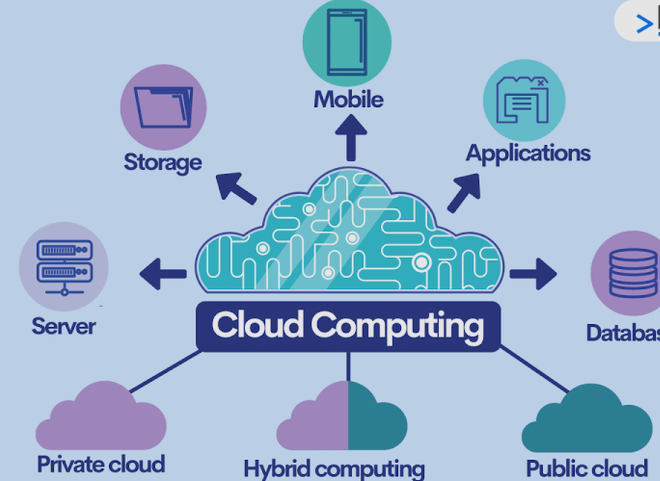
A cloud environment can include:
- Servers
- Storage
- Databases
- Networking
- Virtual machines
- Applications
- Security services
- Backup systems
- Development tools
- Analytics platforms
The deployment model determines who owns the infrastructure, where it is hosted, who can access it, and how much control an organization has over the environment.
The three primary deployment models are:
- Public Cloud
- Private Cloud
- Hybrid Cloud
Although all three provide access to cloud technologies, their approaches to ownership, management, security, scalability, and cost are different.
What Is a Public Cloud?
A public cloud is a cloud computing environment where infrastructure and services are provided by a third-party cloud service provider. Multiple customers use the provider’s infrastructure, while their applications and data remain logically separated.
In a public cloud environment, the cloud provider owns and manages the physical infrastructure. Customers generally pay for the resources and services they use.
Public cloud platforms are commonly used for websites, mobile applications, software development, data storage, business applications, artificial intelligence, analytics, and many other workloads.
How Public Cloud Works
A cloud provider operates large data centers containing servers, networking equipment, storage systems, and other infrastructure. Customers access these resources through the internet or private network connections.
Instead of purchasing physical servers, a business can create virtual machines, databases, storage systems, or application environments when required.
Resources can usually be increased or decreased according to demand.
For example, an online store may require additional computing resources during a major sales event. Once demand decreases, the business can reduce its resources instead of continuing to pay for unused physical infrastructure.
Advantages of Public Cloud
Lower Initial Investment
One of the biggest advantages of public cloud computing is that businesses do not have to purchase large amounts of physical hardware.
Traditional infrastructure can require significant spending on:
- Servers
- Networking equipment
- Data center space
- Cooling systems
- Backup infrastructure
- Power systems
- Hardware maintenance
Public cloud reduces the need for these upfront investments.
Excellent Scalability
Public cloud platforms can provide resources quickly. Businesses can increase computing power, storage, or network capacity as their requirements grow.
This makes public cloud particularly useful for websites and applications where traffic can change significantly.
Easy Deployment
Cloud resources can often be created within minutes. Developers can quickly launch servers, databases, testing environments, and applications without waiting for physical hardware to be installed.
Global Availability
Large public cloud providers operate infrastructure across multiple geographic regions. Businesses can deploy applications closer to their customers to improve availability and performance.
Flexible Pricing
Many public cloud services use usage-based pricing. Organizations generally pay according to the resources or services they consume.
This can be attractive to startups and small businesses that do not want to make a large infrastructure investment.
Disadvantages of Public Cloud
Less Direct Control
The cloud provider controls the underlying physical infrastructure. Customers have less control over hardware compared with a privately owned data center.
Security Responsibility
Although major cloud providers invest heavily in security, customers are still responsible for configuring their own cloud environments correctly.
Misconfigured storage, weak access controls, exposed credentials, or poorly configured networks can create security risks.
Potential Vendor Lock-In
Organizations that heavily depend on proprietary services may find it difficult to move their applications to another provider.
Ongoing Usage Costs
Public cloud can become expensive if resources are poorly managed. Continuous use of large computing resources, storage, databases, or network services can result in substantial monthly bills.
What Is a Private Cloud?
A private cloud is a cloud environment dedicated to a single organization.
Unlike a public cloud, private cloud infrastructure is not shared between unrelated customers. The organization generally has greater control over the infrastructure, architecture, security policies, and resource allocation.
A private cloud can be hosted inside an organization’s own data center or operated by a third-party provider specifically for that organization.
Private clouds are often used by organizations that require greater control, customization, security, or regulatory compliance.
How Private Cloud Works
A private cloud uses technologies such as virtualization, software-defined networking, automated resource management, and cloud management platforms.
The organization can create virtual machines, storage resources, databases, and other services within its dedicated environment.
For example, a financial organization may keep sensitive systems in a private cloud because it wants greater control over where data is stored and how infrastructure is managed.
Advantages of Private Cloud
Greater Control
Organizations have more control over infrastructure configuration, network architecture, security policies, and resource allocation.
This can be important for businesses with specialized technical requirements.
Enhanced Customization
Private cloud environments can be customized according to organizational requirements.
Businesses can select specific hardware configurations, networking architectures, security systems, and software platforms.
Strong Security Controls
A private cloud can provide greater control over access and security architecture. Organizations can design security policies around their specific requirements.
However, private cloud is not automatically more secure than public cloud. Security still depends on proper implementation, monitoring, maintenance, and management.
Compliance Support
Some industries have strict regulatory or data-handling requirements. A private cloud can make it easier to design infrastructure around those requirements.
Predictable Infrastructure
Organizations with stable workloads may benefit from dedicated infrastructure because resources are reserved for their own applications.
Disadvantages of Private Cloud
Higher Costs
Private cloud generally requires more investment in infrastructure, hardware, software, maintenance, security, and IT personnel.
More Management Responsibility
The organization may need to manage many infrastructure components itself.
This can include:
- Hardware
- Operating systems
- Networking
- Storage
- Security
- Backups
- Monitoring
- Updates
- Disaster recovery
Limited Scalability Compared With Large Public Clouds
A private cloud can scale, but its capacity is ultimately limited by the infrastructure available to the organization.
Adding capacity may require purchasing and installing additional hardware.
Requires Skilled IT Staff
Managing private cloud infrastructure can require experienced professionals with knowledge of networking, virtualization, security, automation, storage, and cloud technologies.
What Is a Hybrid Cloud?
A hybrid cloud combines private cloud or on-premises infrastructure with public cloud resources.
The goal is to allow workloads and data to operate across different environments when appropriate.
For example, an organization might keep sensitive customer information in a private environment while running its public-facing website or analytics workloads in a public cloud.
Hybrid cloud can provide a balance between control and flexibility.
How Hybrid Cloud Works
A hybrid environment connects private infrastructure with one or more public cloud environments.
The connection can allow organizations to move data, applications, or workloads between environments depending on business requirements.
For example, a company could normally run an application using private infrastructure but temporarily use public cloud resources when demand increases.
This approach is sometimes called cloud bursting.
Advantages of Hybrid Cloud
Flexibility
Organizations can decide where workloads should run.
Sensitive applications may remain in private infrastructure while less-sensitive applications can use public cloud resources.
Scalability
Hybrid cloud can provide additional capacity when private infrastructure reaches its limits.
Better Workload Placement
Different applications have different requirements. Hybrid cloud allows organizations to place workloads in environments that best fit their needs.
Cost Optimization
Businesses can use private infrastructure for predictable workloads while using public cloud for temporary or variable workloads.
Business Continuity
Public cloud resources can potentially be used as part of backup and disaster recovery strategies.
Disadvantages of Hybrid Cloud
Increased Complexity
Managing two or more environments is more complicated than managing a single cloud environment.
Organizations need to manage:
- Connectivity
- Identity
- Security
- Data movement
- Monitoring
- Application integration
- Access policies
Integration Challenges
Applications running across different environments may require careful integration.
Network latency, compatibility issues, authentication, and data synchronization can create technical challenges.
Higher Management Requirements
Organizations need professionals who understand both private infrastructure and public cloud platforms.
Security Configuration Can Be Complicated
A hybrid environment creates multiple points that need protection. Security policies must be applied consistently across all environments.
Public Cloud vs Private Cloud vs Hybrid Cloud
The biggest differences between these models involve ownership, control, scalability, cost, security, and management.
| Feature | Public Cloud | Private Cloud | Hybrid Cloud |
|---|---|---|---|
| Infrastructure | Provider-owned | Dedicated to one organization | Combination |
| Users | Multiple customers | Single organization | Internal + public |
| Initial Cost | Usually lower | Usually higher | Medium to high |
| Scalability | Excellent | Limited by owned capacity | Excellent |
| Control | Moderate | High | High |
| Customization | Moderate to high | Very high | High |
| Management | Mostly provider-managed | More organization-managed | Shared |
| Security Control | High but shared infrastructure | Very high control | High |
| Complexity | Lower | Medium | High |
| Best For | Startups, websites, apps | Sensitive workloads | Large and growing organizations |
Public Cloud vs Private Cloud: Key Differences
Public and private cloud differ primarily in ownership and resource allocation.
In a public cloud, infrastructure is operated by a cloud provider and shared among multiple customers. In a private cloud, infrastructure is dedicated to one organization.
Public cloud generally provides better flexibility and lower entry costs.
Private cloud generally provides greater control and customization.
For example, a startup launching a new application may choose public cloud because it can begin with a small amount of infrastructure and scale as customers increase.
A large organization with strict internal infrastructure requirements may choose private cloud.
Private Cloud vs Hybrid Cloud
Private cloud provides a dedicated environment, while hybrid cloud connects private infrastructure with public cloud resources.
A private cloud may be sufficient when an organization wants to keep most or all workloads within dedicated infrastructure.
Hybrid cloud becomes attractive when an organization wants to use public cloud services alongside private infrastructure.
For example, a company may keep its primary database in a private environment but use public cloud services for web hosting, content delivery, machine learning, or temporary computing capacity.
Public Cloud vs Hybrid Cloud
Public cloud is generally simpler because an organization can rely heavily on the provider’s infrastructure and services.
Hybrid cloud provides more flexibility but introduces additional complexity.
Public cloud is often suitable for organizations that do not require dedicated infrastructure.
Hybrid cloud can be useful when businesses have existing data centers or private infrastructure that they cannot or do not want to replace completely.
Security Comparison
Security is one of the most important factors when selecting a cloud deployment model.
Public Cloud Security
Public cloud providers typically offer extensive security tools, including identity management, encryption, firewalls, monitoring, threat detection, and access controls.
However, customers must configure these services correctly.
A public cloud environment can be highly secure when properly designed and managed.
Private Cloud Security
Private cloud provides greater control over infrastructure and security architecture.
Organizations can establish customized access policies, network segmentation, encryption strategies, and monitoring systems.
The disadvantage is that the organization is also responsible for more of the security work.
Hybrid Cloud Security
Hybrid cloud requires security policies across multiple environments.
Organizations need to ensure that identity management, encryption, access control, monitoring, and data protection work consistently across private and public infrastructure.
Cost Comparison
Cost depends heavily on workload size, resource utilization, staffing, infrastructure requirements, and management strategy.
Public Cloud Costs
Public cloud usually has lower upfront costs. Businesses can start small and pay for the resources they consume.
However, uncontrolled resource usage can increase monthly expenses.
Private Cloud Costs
Private cloud generally requires higher upfront investment.
Costs may include hardware, software licenses, data center facilities, networking, security systems, maintenance, and IT staff.
Hybrid Cloud Costs
Hybrid cloud can potentially optimize costs by combining private infrastructure with public cloud resources.
However, organizations must also account for integration, networking, monitoring, and management expenses.
Scalability Comparison
Public cloud usually provides the easiest path to rapid scaling because cloud providers operate large pools of computing resources.
Private cloud can scale, but organizations need sufficient physical capacity.
Hybrid cloud can combine private infrastructure with the scalability of public cloud.
For businesses with unpredictable traffic, public or hybrid cloud can therefore be attractive options.
Performance Comparison
Performance depends on application architecture, network design, hardware, workload type, and cloud configuration.
Private cloud can provide predictable performance because resources are dedicated.
Public cloud can provide excellent performance through scalable infrastructure and specialized services.
Hybrid cloud can distribute workloads according to performance requirements.
For example, a company might run high-performance databases on dedicated infrastructure while using public cloud services for less-sensitive processing workloads.
Which Cloud Model Is Best for Small Businesses?
For many small businesses, public cloud is a practical starting point.
Small companies may not have the budget or technical staff required to operate private infrastructure.
Public cloud allows businesses to access computing resources without building their own data center.
However, businesses handling sensitive data should carefully evaluate security, compliance, backup, identity management, and access requirements before selecting any cloud model.
Which Cloud Model Is Best for Large Enterprises?
Large enterprises often use hybrid cloud because they may already have significant investments in private infrastructure.
Hybrid cloud allows them to continue using existing systems while taking advantage of public cloud services.
Some enterprises also use multiple public cloud providers, creating a multi-cloud strategy. Multi-cloud and hybrid cloud are related but are not the same thing.
Hybrid cloud specifically combines private or on-premises infrastructure with public cloud environments.
Which Cloud Model Is Best for Startups?
Public cloud is often attractive to startups because it allows them to launch products quickly with relatively low initial infrastructure investment.
Startups can experiment with new applications, scale resources according to demand, and avoid purchasing physical servers.
As the company grows, it can later adopt more complex architectures if required.
Which Cloud Model Is Best for Highly Regulated Industries?
Industries with strict compliance and data-management requirements may benefit from private or hybrid cloud architectures.
Examples can include:
- Banking
- Financial services
- Healthcare
- Government
- Insurance
- Large enterprises
However, regulatory compliance does not automatically require a private cloud. Public cloud platforms can also support many regulated workloads when properly configured and when the relevant services and controls meet applicable requirements.
Public, Private, or Hybrid Cloud: How to Choose
Organizations should consider several factors before making a decision.
1. Evaluate Data Sensitivity
Determine what types of data the organization stores and how sensitive that information is.
Sensitive workloads may require additional controls or dedicated infrastructure.
2. Consider Your Budget
Compare both initial and long-term costs.
Do not look only at monthly cloud bills. Consider staffing, maintenance, hardware, networking, security, backup, and disaster recovery.
3. Analyze Scalability Requirements
If workloads change frequently, public or hybrid cloud may provide greater flexibility.
4. Examine Compliance Requirements
Determine whether your industry or customers require specific data protection, storage, access, or auditing controls.
5. Consider IT Expertise
Private and hybrid environments can require more specialized knowledge.
If your organization has a small IT team, a managed public cloud environment may be easier to operate.
6. Think About Long-Term Strategy
Cloud selection should support the organization’s future plans.
A solution that works for a small startup may not be appropriate for a large enterprise with complex infrastructure.
Can Businesses Use More Than One Cloud Model?
Yes. Organizations do not necessarily have to choose one model for everything.
A business may use:
- Public cloud for websites
- Private cloud for sensitive databases
- Hybrid infrastructure for applications
- Cloud storage for backups
- Public cloud analytics for large datasets
This workload-based approach allows organizations to select infrastructure according to application requirements.
Hybrid Cloud and Digital Transformation
Hybrid cloud can play an important role in digital transformation because many established organizations cannot immediately move every application to public cloud.
Older applications may depend on traditional infrastructure. Instead of replacing everything at once, organizations can gradually migrate workloads.
This allows businesses to modernize their infrastructure while continuing to operate important legacy systems.
Disaster Recovery Considerations
Cloud deployment models can also influence disaster recovery strategies.
Public cloud can provide scalable infrastructure for backups and recovery environments.
Private cloud can provide dedicated recovery infrastructure.
Hybrid cloud can combine both approaches by maintaining primary systems privately while using public cloud resources for backup or disaster recovery.
A well-designed disaster recovery strategy should consider data backups, recovery time objectives, recovery point objectives, network connectivity, security, and testing.
The Future of Cloud Deployment
Cloud computing continues to evolve as businesses adopt artificial intelligence, machine learning, edge computing, containers, serverless technologies, and increasingly distributed architectures.
Public cloud providers continue to offer specialized services that allow businesses to build sophisticated applications without managing every infrastructure component themselves.
At the same time, private cloud remains important for organizations requiring dedicated infrastructure and greater control.
Hybrid cloud is also expected to remain valuable because many organizations operate a combination of modern cloud applications and traditional systems.
The future is therefore unlikely to involve one universal cloud model. Instead, organizations will choose architectures based on workload requirements, business goals, security needs, and cost considerations.
Final Verdict
Public cloud, private cloud, and hybrid cloud each provide different advantages.
Public cloud is generally best for organizations looking for flexibility, rapid deployment, scalability, and lower initial infrastructure costs.
Private cloud is suitable for organizations that need greater control, customization, dedicated infrastructure, and specific security or compliance capabilities.
Hybrid cloud is ideal for organizations that want to combine the flexibility of public cloud with the control of private infrastructure.
There is no single cloud deployment model that is perfect for every organization. The right choice depends on the type of workloads, data sensitivity, budget, scalability requirements, compliance obligations, IT expertise, and long-term business strategy.
For many modern organizations, the most effective approach is not simply choosing between public and private cloud but creating a carefully designed environment where each workload runs in the infrastructure that best meets its requirements.