





Artificial Intelligence (AI) has moved from being a futuristic concept to becoming a practical part of everyday life and modern business. From voice assistants and personalized recommendations to automated customer service and advanced data analysis, AI is helping people complete tasks faster, make better decisions, and solve problems more efficiently.
Businesses of all sizes are adopting AI to improve productivity, reduce operating costs, understand customers, automate repetitive work, and create better products and services. At the same time, ordinary users interact with AI every day, often without realizing it.
This article explores 10 major benefits of Artificial Intelligence in everyday life and business, explains how each benefit works, and provides practical examples.
What Is Artificial Intelligence?
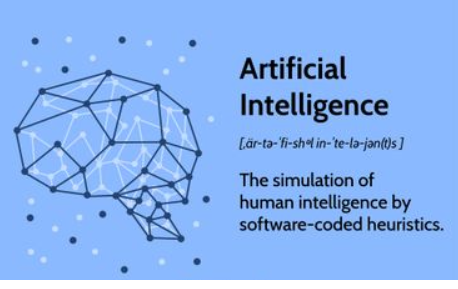
Artificial Intelligence is a branch of technology that enables computers and software to perform tasks that normally require human intelligence. These tasks can include understanding language, recognizing images, identifying patterns, making predictions, solving problems, and generating content.
AI systems use technologies such as machine learning, natural language processing, computer vision, and deep learning to analyze information and produce useful results.
For example, when a streaming service recommends a movie based on what you previously watched, AI may be analyzing your viewing behavior and comparing it with patterns from millions of other users.
AI is not limited to one industry. It is being used in healthcare, finance, education, transportation, retail, manufacturing, marketing, cybersecurity, entertainment, and many other areas.
1. Saves Time and Automates Repetitive Tasks
One of the biggest benefits of AI is its ability to automate repetitive tasks. Many everyday and business activities involve actions that have to be performed again and again. AI can handle many of these processes automatically.
For businesses, AI can automate tasks such as:
- Sorting emails
- Scheduling appointments
- Entering and organizing data
- Generating routine reports
- Processing customer requests
- Categorizing documents
- Monitoring systems
- Creating basic summaries
Instead of employees spending hours performing repetitive work, AI can complete many routine processes quickly.
AI in Everyday Life
People also benefit from automation in their personal lives. Smart email applications can identify spam and categorize messages. Smartphones can automatically organize photographs. Voice assistants can set reminders, create calendar events, and answer basic questions.
Smart home devices can also automate everyday activities. For example, intelligent thermostats can adjust temperatures based on usage patterns, while robotic vacuum cleaners can automatically clean rooms.
By reducing the amount of manual work people need to perform, AI gives users more time to focus on important activities.
2. Improves Productivity
AI can significantly increase productivity by helping people complete work more efficiently.
Instead of replacing every human task, AI often works as an assistant. It can help employees research information, summarize documents, analyze data, generate ideas, draft content, and organize information.
For example, a marketing professional might use AI to generate initial ideas for an advertising campaign. A software developer can use AI-powered tools to identify programming errors or create basic code structures. A business manager can use AI to analyze sales data and identify important trends.
AI as a Digital Assistant
AI-powered digital assistants can help users manage their schedules, create reminders, organize information, and complete routine tasks.
The productivity advantage becomes especially valuable when employees have large amounts of information to process.
AI can quickly analyze large datasets and highlight important information, allowing people to spend more time on decision-making and creative work.
3. Provides Faster Access to Information
Another important benefit of AI is its ability to find, process, summarize, and organize information quickly.
Traditionally, a person might need to search through multiple documents or websites to find an answer. Modern AI systems can process large amounts of information and present relevant results in a more understandable format.
Everyday Examples
People use AI-powered search and recommendation systems when looking for:
- Products
- Restaurants
- Movies
- News
- Travel information
- Educational materials
- Technical solutions
- Entertainment
Smart search systems can understand the meaning behind a user’s question rather than simply matching individual keywords.
AI-powered assistants can also explain complicated subjects in simpler language, making information more accessible to beginners.
Business Applications
Businesses can use AI to search internal documents, customer records, product information, and knowledge bases. Employees can find relevant information without manually searching through thousands of files.
This can improve efficiency, especially in large organizations where information is spread across multiple systems.
4. Enhances Customer Service
Customer service is another area where AI has created major improvements.
AI-powered chatbots and virtual assistants can communicate with customers, answer frequently asked questions, provide basic support, and guide users through common processes.
For example, a customer visiting a company’s website might ask:
“Where is my order?”
An AI-powered customer service system may be able to check the order status and provide an immediate response.
24/7 Support
One major advantage of AI is that automated systems can operate around the clock.
A traditional customer service department may have limited operating hours. AI-powered systems can provide assistance at any time of day.
This is particularly useful for international companies serving customers in different time zones.
AI can also handle many customer requests simultaneously, reducing waiting times.
Human Employees Still Matter
AI does not have to completely replace human customer service representatives. In many cases, AI can handle simple questions while complex or sensitive issues are transferred to human employees.
This combination can provide faster service while allowing human representatives to focus on difficult problems.
5. Helps Businesses Make Better Decisions
Businesses generate huge amounts of data every day. Sales transactions, customer interactions, website visits, advertising performance, inventory records, and financial information can all contain useful insights.
However, analyzing large amounts of data manually can be difficult and time-consuming.
AI can analyze data, identify patterns, and generate predictions that help businesses make informed decisions.
Predictive Analytics
AI can be used to predict potential outcomes based on historical information.
For example, a retailer might analyze previous sales data to estimate which products are likely to become popular during a particular season.
A company could also use AI to identify customers who may be interested in a particular product.
Better Business Planning
AI-generated insights can help businesses make decisions about:
- Inventory
- Pricing
- Marketing
- Sales
- Customer retention
- Staffing
- Product development
- Business operations
AI does not guarantee that every prediction will be correct. However, when used properly, it can provide valuable information that supports human decision-making.
6. Personalizes User Experiences
AI allows businesses and digital services to provide more personalized experiences.
Different users have different interests, preferences, and behaviors. AI can analyze these differences and customize recommendations or content.
For example, an online shopping platform might recommend products based on previous purchases and browsing behavior.
A streaming platform can recommend movies or shows based on viewing history.
A music application can suggest songs based on listening habits.
Personalization in Everyday Life
Many people interact with personalized AI systems every day.
Social media platforms may use algorithms to determine which posts appear in a user’s feed. Search engines can provide results based on context. Online stores can recommend products that match a user’s interests.
Personalization can make digital services more convenient because users do not have to search through everything manually.
Business Benefits
For businesses, personalization can improve customer engagement. When customers receive products, offers, or content that are more relevant to their interests, they may be more likely to interact with a company.
7. Reduces Business Costs
AI can help businesses reduce costs by improving efficiency and automating certain processes.
Companies spend significant amounts of money on repetitive administrative tasks, customer support, data processing, quality control, and other operational activities.
AI can reduce the amount of manual work required for some of these processes.
Examples of Cost Reduction
A company can use AI to:
- Automate customer support
- Detect unusual transactions
- Optimize inventory
- Improve production processes
- Reduce administrative work
- Analyze business performance
- Identify equipment problems
- Improve advertising efficiency
For example, predictive maintenance systems can analyze equipment data and identify signs of potential problems before major failures occur.
Preventing equipment failures can reduce repair costs and minimize downtime.
Small Businesses Can Benefit Too
AI is not only useful for large corporations. Small businesses can use affordable AI-powered tools for writing, customer communication, marketing, accounting assistance, scheduling, data analysis, and other tasks.
This gives smaller companies access to technologies that previously required significant financial resources.
8. Improves Accuracy and Reduces Human Error
Humans can make mistakes, especially when performing repetitive tasks or analyzing large amounts of information.
AI systems can perform certain tasks consistently according to predefined rules and patterns.
For example, AI can help identify unusual financial transactions, check large datasets, detect defects in manufactured products, or analyze images for specific patterns.
AI in Data Processing
When employees manually enter or analyze thousands of records, mistakes can occur due to fatigue or lack of attention.
Automated systems can process large volumes of information consistently.
However, AI itself is not perfect. Poor-quality data, incorrect instructions, biased training information, or system errors can lead to incorrect results.
For this reason, businesses should use appropriate human oversight, especially when AI is being used for important decisions.
The Best Approach
The strongest approach is often a combination of AI and human expertise.
AI can process information quickly, while humans can provide judgment, context, ethics, and final decision-making.
9. Improves Accessibility and Communication
AI can make technology easier to use for people with different needs and abilities.
Speech recognition, text-to-speech systems, automatic captions, translation tools, and image recognition can help people communicate and access information.
Speech and Voice Technology
Voice recognition allows users to interact with computers and smartphones using spoken commands.
People can dictate messages, search for information, control devices, or perform other tasks without typing.
Translation
AI-powered translation systems can help people communicate across different languages.
This is useful for travelers, students, businesses, international organizations, and individuals communicating with people from different countries.
Accessibility Features
AI can also help convert speech into text, describe visual information, recognize objects, and provide automated captions.
These technologies can make digital products more accessible and inclusive.
10. Encourages Innovation and New Business Opportunities
Perhaps one of the most important long-term benefits of AI is that it enables new products, services, and business models.
Companies can use AI to create solutions that were previously difficult or impossible to develop.
AI is contributing to innovation in areas such as:
- Healthcare technology
- Autonomous transportation
- Smart homes
- Robotics
- Financial technology
- Education
- Cybersecurity
- Content creation
- Scientific research
- Customer analytics
AI-Powered Products
Businesses can build AI features directly into their products. For example, a software company might create an intelligent assistant that helps customers analyze information.
An online education company can use AI to provide personalized learning recommendations.
A retailer can develop intelligent shopping assistants.
These innovations can create entirely new markets and revenue opportunities.
Opportunities for Entrepreneurs
AI has also lowered the barrier for many entrepreneurs who want to start online businesses.
A small team can use AI tools to assist with research, marketing, customer support, content creation, data analysis, and software development.
AI does not eliminate the need for business knowledge or creativity, but it can help individuals accomplish more with limited resources.
How AI Benefits Everyday Users and Businesses Differently
Although AI provides many benefits to both individuals and businesses, the specific advantages can be different.
| Benefit | Everyday Life | Business |
|---|---|---|
| Automation | Smart homes and reminders | Automated workflows |
| Productivity | Personal assistants | Employee assistance |
| Information | Intelligent search | Internal knowledge systems |
| Customer service | Faster support | AI chatbots |
| Decision-making | Recommendations | Business analytics |
| Personalization | Customized content | Personalized marketing |
| Cost savings | Efficient household devices | Reduced operational costs |
| Accuracy | Smart organization | Data and quality control |
| Accessibility | Voice and translation tools | Inclusive customer experiences |
| Innovation | New smart services | New products and business models |
This shows why AI has become such an important technology across different areas of modern life.
Potential Challenges of Artificial Intelligence
Despite its many advantages, AI also comes with challenges.
AI systems can produce incorrect information, make biased predictions, create privacy concerns, or be misused. Businesses must also consider cybersecurity, data protection, transparency, and employee training when implementing AI.
Another important concern is overdependence on automated systems. People should understand when AI can be trusted and when human judgment is necessary.
The goal should not simply be to automate everything. Instead, organizations should identify areas where AI can genuinely improve efficiency, accuracy, and user experience.
How Businesses Can Use AI Effectively
Businesses interested in adopting AI should start with practical problems rather than adopting technology simply because it is popular.
A company can begin by identifying repetitive processes that consume significant employee time.
For example:
- Identify a specific business problem.
- Determine whether AI can realistically solve it.
- Start with a small project.
- Measure the results.
- Review accuracy and potential risks.
- Train employees to work with the technology.
- Expand successful AI applications gradually.
This approach allows businesses to gain experience while reducing unnecessary costs and risks.
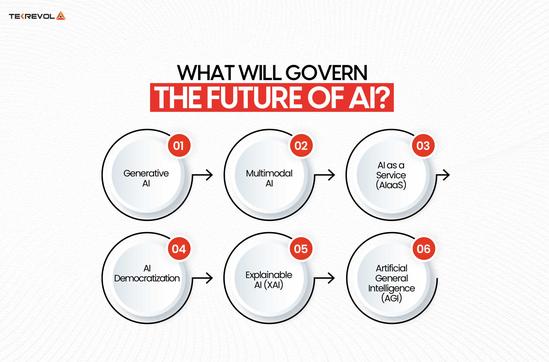
The Future of Artificial Intelligence
AI is likely to become even more integrated into everyday life and business operations.
Future AI systems may become better at understanding context, processing different types of information, working with software applications, and assisting humans with complex tasks.
Businesses may increasingly use AI as a standard part of customer service, marketing, operations, research, analytics, and product development.
For consumers, AI may become less visible but more deeply integrated into smartphones, vehicles, homes, online services, healthcare technologies, and educational platforms.
The most important development may not be AI replacing humans but humans and AI working together more effectively.
Conclusion
Artificial Intelligence has become one of the most influential technologies of the modern digital era. Its benefits extend far beyond futuristic applications, as people and businesses already use AI for everyday tasks, communication, entertainment, productivity, customer service, and decision-making.
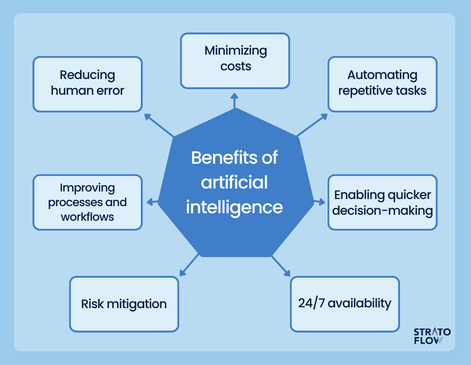
The 10 major benefits of AI include saving time, improving productivity, providing faster access to information, enhancing customer service, supporting better decisions, personalizing experiences, reducing costs, improving accuracy, increasing accessibility, and encouraging innovation.
For businesses, AI can provide a competitive advantage by automating routine processes and helping employees work with large amounts of information more efficiently. For everyday users, AI can make digital services faster, smarter, and more convenient.
At the same time, responsible use remains important. AI should be implemented with appropriate human oversight, data protection, security, and attention to accuracy.