





Artificial Intelligence (AI) is no longer a technology limited to research laboratories or science-fiction movies. It has become one of the most important forces shaping the future of technology. From smartphones and search engines to healthcare, finance, transportation, cybersecurity, and business automation, AI is changing how people interact with machines and how organizations solve problems.
The rapid development of machine learning, generative AI, natural language processing, computer vision, robotics, and intelligent automation is creating new possibilities across almost every industry. Businesses are using AI to analyze enormous amounts of information, automate repetitive tasks, understand customers, improve decision-making, and develop new products and services.
At the same time, AI is changing the technology industry itself. Software development is becoming more automated, data analysis is becoming faster, and computers are increasingly capable of understanding human language, images, audio, and complex patterns.
This article explores how AI is changing the future of technology, the most important AI trends, and the major applications that are expected to shape the years ahead.
What Is Artificial Intelligence?
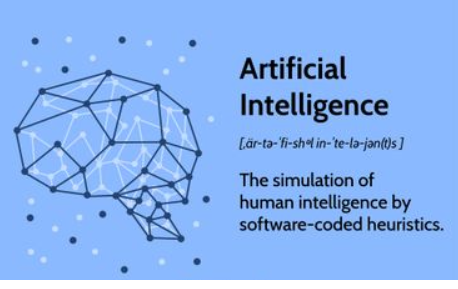
Artificial Intelligence refers to computer systems designed to perform tasks that traditionally require human intelligence. These tasks can include learning from information, recognizing patterns, understanding language, making predictions, solving problems, and generating content.
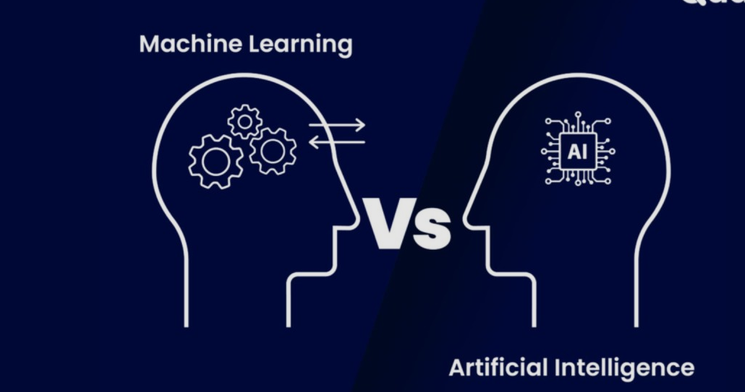
Modern AI systems generally rely on algorithms and large amounts of data. Machine learning allows systems to identify patterns from data and improve their performance without being explicitly programmed for every possible situation.
For example, an AI recommendation system can analyze what users have previously watched or purchased and use that information to predict what they may like next.
Generative AI takes this concept further by creating new content such as text, images, audio, video, software code, and other forms of digital material.
Why AI Is Transforming Technology
AI is changing technology because it allows computers to perform increasingly sophisticated tasks while reducing the amount of manual work required from humans.
Traditional software generally follows predefined instructions. AI systems can instead analyze information and make predictions or decisions based on patterns.
This difference has significant consequences. Businesses can process information more quickly, developers can automate parts of software creation, and consumers can interact with technology using natural language instead of complicated commands.
AI is also becoming more accessible. Powerful AI capabilities are being integrated into smartphones, computers, cloud platforms, business software, search engines, and everyday applications.
As these technologies become easier to use, AI is likely to become an invisible layer of many digital services.
Major AI Trends Shaping the Future of Technology
1. Generative AI Will Continue to Grow
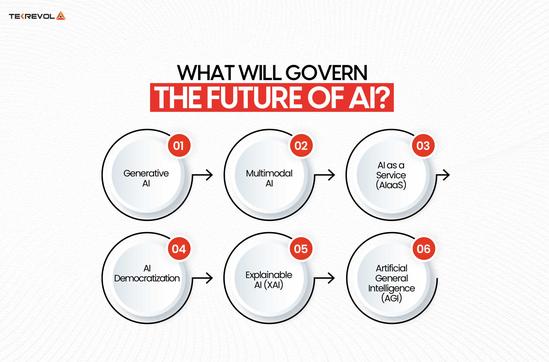
Generative AI is one of the most significant technology trends of recent years. Unlike traditional AI systems that primarily classify or predict information, generative AI can create new content.
It can generate articles, summaries, software code, images, presentations, marketing materials, product descriptions, and other digital content.
Businesses are already using generative AI to improve productivity. Employees can use AI assistants to brainstorm ideas, summarize documents, draft communications, analyze information, and automate repetitive tasks.
In the future, generative AI is expected to become increasingly integrated into productivity software, creative tools, search systems, customer-service platforms, and enterprise applications.
2. AI-Powered Software Development
Software development is another area being transformed by AI.
AI coding assistants can help developers write code, explain unfamiliar programming concepts, identify potential errors, generate tests, and convert natural-language instructions into software components.
This does not necessarily mean that developers will disappear. Instead, the role of developers is likely to evolve.
Developers may spend less time writing repetitive code and more time designing systems, reviewing AI-generated code, solving complex problems, and making architectural decisions.
AI could eventually support more of the software development lifecycle, including planning, coding, testing, debugging, documentation, and deployment.
3. AI and Robotics Will Become More Connected
Robotics and AI are increasingly developing together. Traditional robots generally perform specific tasks according to predefined instructions. AI can give robots greater flexibility and the ability to understand changing environments.
AI-powered robots can use cameras and sensors to identify objects, understand surroundings, navigate spaces, and make decisions.
Future applications may include warehouse automation, manufacturing, agriculture, healthcare assistance, delivery services, cleaning systems, and home robotics.
The combination of advanced AI models with increasingly capable robotic hardware could create machines that can perform a wider variety of real-world tasks.
4. AI-Powered Personal Assistants
Personal digital assistants are expected to become more intelligent and useful.
Instead of simply answering individual questions, future AI assistants may understand context, remember preferences, coordinate tasks, interact with software, and complete multi-step activities.
For example, an AI assistant could potentially help organize a schedule, summarize emails, prepare documents, compare options, manage travel arrangements, or assist with research.
The major shift will be from AI that simply responds to commands toward AI systems that can assist with larger workflows.
5. Multimodal Artificial Intelligence
Early AI applications often focused on one type of information, such as text or images. Modern AI is increasingly becoming multimodal.
Multimodal AI can work with combinations of text, images, audio, video, and other data types.
For example, a user could provide an image and ask an AI system to explain what it contains. A business could combine documents, photographs, audio recordings, and structured data to create a more complete analysis.
This development will make human-computer interaction more natural because people communicate using multiple forms of information rather than text alone.
6. AI at the Edge
Cloud computing has played an important role in AI development, but not every AI task needs to be processed in a distant data center.
Edge AI involves running AI models directly on devices such as smartphones, cameras, vehicles, industrial machines, and other connected hardware.
Processing information locally can improve response times and reduce dependence on internet connectivity. It can also provide privacy advantages because some information can remain on the device.
As mobile processors and specialized AI chips become more powerful, edge AI is expected to become increasingly common.
7. AI Chips and Specialized Hardware
The growth of AI is creating demand for specialized computing hardware.
Traditional processors are not always optimized for the enormous mathematical workloads involved in modern AI models. Specialized AI accelerators can process these operations more efficiently.
Future computers, smartphones, servers, and other devices are likely to include increasingly powerful AI-focused hardware.
This hardware development will help make advanced AI applications faster, more efficient, and potentially less expensive to operate.
Applications of AI That Will Shape the Future
AI in Healthcare
Healthcare is one of the areas where AI could have a major technological impact.
AI systems can analyze medical images, identify patterns in patient information, assist with administrative work, and support research.
For example, computer vision can help analyze certain types of medical scans. Machine learning can also be used in research to identify patterns in large datasets.
AI can additionally help healthcare organizations automate appointment management, documentation, customer communication, and other administrative processes.
The future will likely involve greater collaboration between healthcare professionals and AI systems rather than complete replacement of medical professionals.
AI in Education
AI is changing education by making learning more personalized.
Traditional education often requires one teacher to support many students with different abilities and learning speeds. AI systems can potentially provide individualized explanations, practice questions, feedback, and learning recommendations.
AI tutors can explain difficult concepts in different ways depending on the student’s needs.
Teachers can also use AI to create educational materials, organize information, develop exercises, and reduce certain administrative tasks.
The challenge will be ensuring that AI supports education without reducing the importance of teachers, critical thinking, creativity, and human interaction.
AI in Cybersecurity
Cybersecurity is becoming increasingly important as organizations move more activities online.
AI can analyze large volumes of network activity and identify unusual patterns that may indicate security threats.
Security systems can use machine learning to detect suspicious behavior, identify potential malware, prioritize alerts, and assist security professionals with investigations.
However, AI can also be used by attackers. This means cybersecurity organizations will need to use AI defensively while developing strategies to protect against AI-assisted attacks.
The future of cybersecurity will therefore involve an ongoing technological competition between automated defense systems and increasingly sophisticated threats.
AI in Finance and Banking
Financial institutions handle enormous amounts of data, making AI particularly useful in the financial sector.
AI can assist with fraud detection, transaction monitoring, risk analysis, customer service, financial forecasting, and document processing.
For example, an AI system can identify unusual transaction patterns that may indicate fraudulent activity.
AI-powered virtual assistants can also answer common banking questions and help customers navigate financial services.
As AI becomes more advanced, financial organizations will increasingly use intelligent systems to support both customers and employees.
AI in Transportation
Transportation is another industry undergoing significant technological change.
AI is used in navigation systems, traffic management, vehicle safety features, logistics, and autonomous-driving research.
AI-powered systems can analyze road conditions, traffic patterns, vehicle data, and environmental information.
In logistics, AI can help companies optimize delivery routes, predict demand, manage inventory, and reduce transportation costs.
Autonomous vehicles remain a complex technological challenge, but continued progress in AI, sensors, mapping, and computing could lead to increasingly automated transportation systems.
AI in Manufacturing
Manufacturing has used automation for decades, but AI is making industrial automation more intelligent.
AI systems can monitor machines, detect manufacturing defects, predict equipment failures, and optimize production processes.
Predictive maintenance is particularly valuable because companies can identify potential equipment problems before major failures occur.
Computer vision can also inspect products at high speed and identify defects that may be difficult for humans to detect consistently.
The future factory is likely to combine robotics, sensors, cloud computing, edge computing, and AI into highly connected production environments.
AI in Retail and E-Commerce
Retailers are using AI to understand customers and improve shopping experiences.
AI can analyze purchasing patterns, recommend products, forecast demand, optimize inventory, and personalize marketing.
Online stores can use recommendation systems to show products that are more relevant to individual customers.
AI chatbots and virtual shopping assistants can also help customers find products and answer questions.
In the future, AI may make shopping experiences increasingly personalized, with digital assistants helping customers compare products, understand features, and make purchasing decisions.
AI in Content Creation
The creative industry is experiencing major changes because of generative AI.
AI tools can assist with writing, graphic design, video production, music creation, animation, and other creative processes.
For content creators, AI can reduce the time required for repetitive tasks. For example, it can help generate ideas, create drafts, summarize information, or produce variations of existing content.
However, human creativity remains important. AI-generated material often benefits from human direction, editing, fact-checking, and creative judgment.
The future may therefore involve humans and AI working together rather than AI completely replacing creative professionals.
AI and the Internet of Things
The Internet of Things, commonly called IoT, connects physical devices to digital networks. Examples include smart appliances, industrial sensors, connected vehicles, security cameras, and wearable devices.
AI can make IoT systems more intelligent.
Instead of simply collecting information, connected devices can use AI to analyze that information and take appropriate actions.
For example, smart buildings can analyze energy consumption and automatically adjust heating, cooling, or lighting. Industrial equipment can monitor itself for signs of failure.
The combination of AI and IoT is likely to create increasingly intelligent environments in homes, factories, offices, farms, and cities.
AI and Cloud Computing
Cloud computing provides the infrastructure required to store data and run many AI applications.
AI and cloud computing are therefore closely connected.
Cloud platforms allow organizations to access powerful computing resources without building all the required infrastructure themselves.
At the same time, AI can improve cloud services through intelligent resource management, security monitoring, automation, and data analysis.
The future may involve a combination of cloud AI and edge AI, where large workloads are processed in the cloud while time-sensitive tasks are handled locally on devices.
AI and Big Data
Modern organizations generate enormous quantities of information. Humans cannot manually analyze all of it efficiently.
AI can process large datasets and identify patterns that may otherwise remain hidden.
This makes AI particularly valuable for business intelligence, scientific research, healthcare research, marketing, finance, cybersecurity, and many other fields.
As organizations collect more data, the importance of AI-powered data analysis will continue to increase.
However, better AI results depend heavily on data quality. Incorrect, incomplete, biased, or outdated information can lead to poor results.
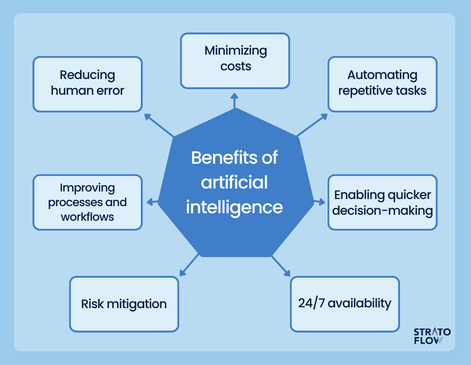
Benefits of AI for the Future
AI offers several major benefits for technology and society.
Increased Productivity
AI can automate repetitive activities and help employees complete complex tasks more quickly.
Faster Decision-Making
AI can process large quantities of information and provide insights faster than traditional manual analysis.
Greater Personalization
AI systems can adapt products and services to individual users.
Improved Automation
AI can make automation more flexible by allowing systems to respond to changing conditions.
New Products and Services
AI creates opportunities for businesses to develop products that were previously difficult or impossible to build.
Better Accessibility
AI-powered speech recognition, translation, vision tools, and assistive technologies can make digital services more accessible to more people.
Challenges of AI Development
Despite its potential, AI also creates important challenges.
Privacy Concerns
AI systems often require large amounts of information. Organizations must ensure that personal information is handled responsibly and securely.
AI Bias
AI systems can produce biased results when training data contains biases or does not adequately represent different groups.
Security Risks
AI can be exploited for malicious purposes, including scams, misinformation, automated attacks, and other forms of cybercrime.
Job Transformation
Automation may reduce demand for certain repetitive tasks while increasing demand for new technical and creative skills.
Rather than viewing AI only as a job replacement technology, it is useful to understand it as a technology that will change the nature of many jobs.
Reliability and Accuracy
AI systems can sometimes produce incorrect information or make poor decisions. Human oversight remains important, especially in high-stakes environments.
The Future of Human-AI Collaboration
One of the most important developments in the future of technology will be collaboration between humans and AI.
AI is particularly good at processing large quantities of information, identifying patterns, generating possibilities, and automating repetitive work.
Humans remain essential for judgment, empathy, creativity, leadership, ethics, and understanding complex social situations.
The strongest systems are likely to combine these strengths.
For example, an engineer could use AI to analyze thousands of possible designs while making the final decisions based on practical requirements. A doctor could use AI as an analytical tool while relying on professional expertise and patient interaction.
This human-AI collaboration could become a standard model across many industries.
Skills That Will Become Important in an AI-Driven Future
As AI changes technology, the skills required in the workplace will also change.
Technical skills such as programming, data analysis, AI development, cybersecurity, and cloud computing will remain valuable.
At the same time, non-technical skills such as critical thinking, communication, creativity, problem-solving, and adaptability will become increasingly important.
People who learn how to effectively use AI tools may be able to complete tasks faster and focus more attention on higher-value activities.
Continuous learning will therefore become an important part of professional development.
What Will AI Technology Look Like in the Future?
AI is likely to become less visible as a separate technology and more integrated into everyday products.
Instead of opening a specific AI application, users may interact with AI through their operating systems, smartphones, websites, vehicles, workplace software, and household devices.
AI could become a standard layer of digital infrastructure.
Computers may become more conversational, applications may become more personalized, and automated systems may be capable of completing increasingly complex workflows.
The most important transformation may not be a single AI invention but the gradual integration of intelligence into almost every category of technology.
Conclusion
Artificial Intelligence is changing the future of technology at an extraordinary pace. Generative AI, machine learning, robotics, multimodal systems, edge computing, AI chips, and intelligent automation are transforming how computers operate and how people interact with digital systems.
AI applications are expanding across healthcare, education, finance, cybersecurity, transportation, manufacturing, retail, content creation, and many other industries. At the same time, AI is becoming closely connected with cloud computing, big data, the Internet of Things, and advanced robotics.
The future of AI will bring significant opportunities, but it will also create challenges involving privacy, security, accuracy, bias, employment, and responsible technology development.
Ultimately, AI is unlikely to be simply about replacing humans. Its greatest potential may come from helping people work more efficiently, solve difficult problems, discover new possibilities, and build technologies that were previously impossible.